
Q&A with Malcolm Eaton: The Next Chapter of the Life Sciences Innovation Hub
General, 12 Aug 2026
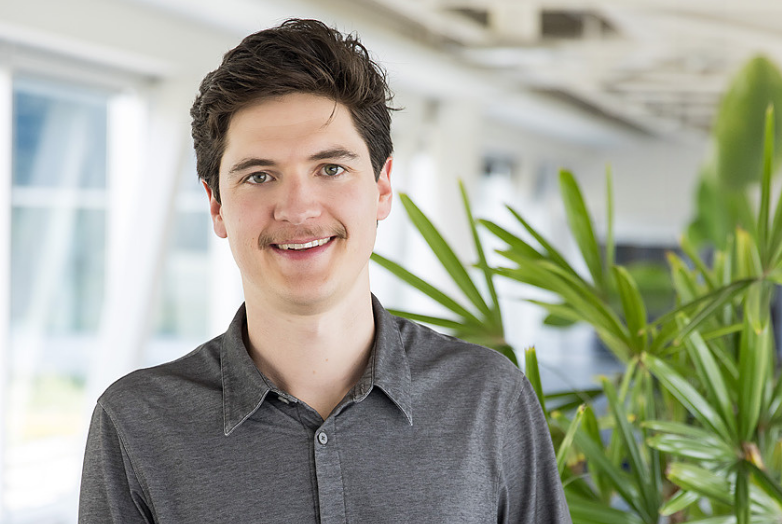
Malcolm Eaton has stepped into the role of Associate Director, Life Sciences Innovation Hub, bringing experience across academic research, technology transfer, venture building, and Alberta’s life sciences innovation ecosystem.
Malcolm’s background includes postdoctoral research in prenatal medicine, after which he transitioned to innovation, helping launch Vessel Prosthetics, and joining Flagship Pioneering as a fellow in 2024. He has extensive experience working with founders and inventors throughout his time at Thin Air Labs, and as an Innovation manager at Innovate Calgary’s Tech Transfer office.
In this Q&A, Malcolm shares what drew him to the role, where he sees the Life Sciences Innovation Hub going, and how LSIH can help more researchers and founders move promising ideas toward real-world impact.
This Q&A has been edited for length and clarity.
What drew you to the Associate Director role with the Life Sciences Innovation Hub?
What drew me to the role was the opportunity to help shape the value proposition of the Life Sciences Innovation Hub. The Universities goal of being the most entrepreneurial in the country is directly aligned with the expertise and services we provide at the LSIH, but starting a life science company is never a simple task and requires creative solutions and support for innovators looking to take the leap.
I’m excited by the opportunity to build things, test new ideas, and help people explore what is possible.
Where do you see LSIH going over the next few years?
I hope LSIH becomes more focused, more collaborative, and more clearly positioned.
No one province in Canada has everything life sciences companies need. The capital, expertise, infrastructure, and technical knowledge required to build these companies are spread across different places. That means we need to collaborate more effectively, identify where we can be strongest, and build a unique value proposition around that.
For LSIH, focus will be key. We need to know what we are great at and become known for that.
Why is a dedicated life sciences hub important for founders?
Life sciences companies are different from many other startups. You can’t usually start one in a basement. You need physical infrastructure, access to equipment, technical expertise, and collaboration to test your hypotheses.
Those activities are expensive and time-consuming. LSIH helps reduce those barriers by providing access to infrastructure, equipment, and expertise at a cost and scale that is very hard to find elsewhere.
But the hub is not just a physical space. It is also a community, a network, and a place where founders can get feedback quickly, test assumptions, and connect with people who can help them move faster.
What makes life sciences commercialization especially challenging?
Life sciences are highly regulated and requires a very high standard of evidence. For founders, that means they are not just building one thing. They are managing a complex web of challenges, including regulatory pathways, technology development, IP, business strategy, fundraising, and market validation.
All of those things have to happen in parallel. One of the best ways to move faster is to bring in experienced people, whether that is through the Technology Transfer Office, expert advisors, or founders who have built companies in the same space.
How does your academic background shape the way you work with researchers and founders?
I start from a place of empathy. When I was in school, I was largely naive to the world of commercialization, so I assume many researchers are, too.
Discovery-based science is its own challenge. It is innovative and difficult, but it operates within a different frame of reference. Understanding that frame of reference is important. You must meet researchers where they are and then help create pathways between their work and potential societal impact.
Not every scientist wants to commercialize their work, and that is completely fine. But for researchers who are interested in impact through commercialization, we can help them understand what that pathway might look like.
How has your venture experience influenced your approach?
Helping start Vessel Prosthetics and working with innovators through Thin Air Labs gave me a better understanding of what makes a company, founder, or product fundable.
My time in Boston also showed me how much discipline goes into generating new ideas. Academic science is often iterative by design, while venture-building environments push you to think about bigger, more ambitious ideas and then test whether they make sense.
There needs to be a balance between technology push and market pull. Instead of only asking where technology might fit, we also need to ask what the market needs, what society needs, and how we can help solve those problems.
What do researchers sometimes misunderstand about commercialization?
I don’t think it is always a misunderstanding. Sometimes it is more of a resistance to change.
As a researcher, you dedicate your life to a field. If you find a thread of knowledge that could define your academic career, you naturally want to protect it. But commercialization does not mean giving up your work. It means giving it a chance.
Publishing can be a public good, but most publications do not automatically turn into impact. Without a plan, a discovery can sit on the shelf. Commercialization is one way to create a path forward.
How can LSIH strengthen the connection between University of Calgary research and real-world impact?
There is already a lot of good work happening across the University. Several faculties and groups have people focused on translating research into impact, and LSIH can work with those groups to better understand their needs, identify gaps, and show how the hub can be used as a resource.
We need to become a go-to place for people across the university who are thinking about how research can move toward impact.
What makes Calgary and the University of Calgary a strong environment for life sciences innovation?
Calgary has a genuine entrepreneurial spirit. We may lack experience, but we do not lack enthusiasm.
One of the University of Calgary’s strengths is access to clinicians and clinician scientists. That connection between scientists, clinicians, and the real-world end user is extremely valuable, especially for testing ideas, building credibility, and understanding needs.
What would you say to a University of Calgary researcher who has an idea but is not sure whether it could become a company?
You are not going to find a more welcoming or lower-risk environment to try things out than LSIH.
The support, infrastructure, and cost are designed to be as low barrier as possible. So, try something. See if it works. We are not afraid of failure. We want people to try, learn, fail fast if needed, or succeed.
Looking ahead, what do you want LSIH to be known for?
I want LSIH to be known as a go-to resource and a centre of excellence in a focused area of life sciences innovation. There is real momentum in Neuroscience, Oncology, Infectious Disease and data-driven solutions, all of which are in an idea surplus, meaning there are far more ideas and technologies than money and support to develop them. LSIH provides critical infrastructure for many of these projects.
If we can define where we are strongest, we can provide the resources founders need not only to get started, but to scale, pilot, and grow with the hub.
We have the infrastructure and the people in place. Now it is about building with intention, taking some risks, and exceeding our own expectations.