
Helping Dronnix take flight, from UCalgary research to real-world impact
General, 23 Jul 2026
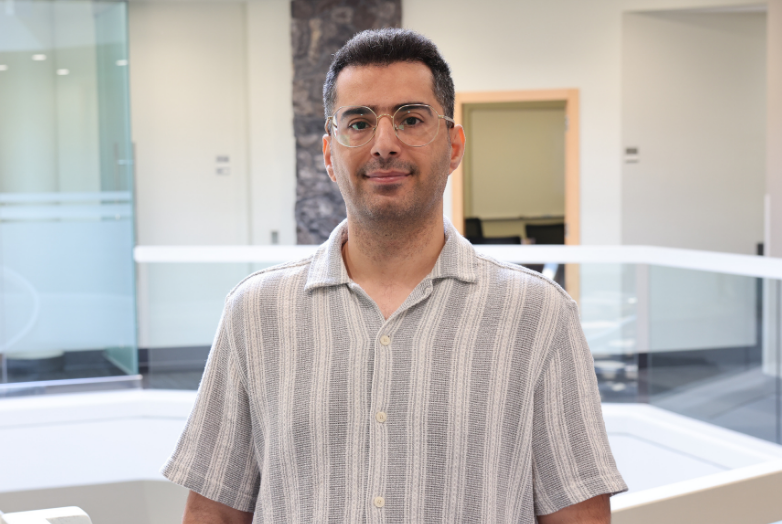
When Salar Ghaffarian came to the University of Calgary to pursue a research-based master’s degree in geography, he was looking for more than academic training.
He wanted to be part of an environment where technical expertise could be turned into practical solutions and where researchers were encouraged to think entrepreneurially.
That environment helped lay the foundation for Dronnix, the Calgary company he now leads as founder and CEO.
“The University of Calgary helped me a lot,” says Ghaffarian. “One of the main reasons I chose UCalgary was the entrepreneurial experience of my supervisor, Dr. Geoffrey Hay.”
Hay is a professor in GIScience at UCalgary and co-founder of MyHEAT Inc., a startup built from his university research. Although Ghaffarian had received offers from other institutions, including opportunities to pursue a PhD, he was drawn to UCalgary because of its combination of research expertise, entrepreneurial thinking and practical resources.
Through his work with Hay, university programs and the Hunter Hub for Entrepreneurial Thinking, Ghaffarian met students and founders at different stages of developing their ideas. He also began learning about Innovate Calgary and the support available to researchers and entrepreneurs connected to the university.
“There were tools and systems for students who wanted to find the right career and also to become entrepreneurs,” he says.
After graduating, Ghaffarian joined MyHEAT, where he gained industry experience and encountered the mapping challenge that would eventually lead to Dronnix.
The company is developing products that support real-time, large-scale drone mapping and inspection, including applications for natural disasters such as wildfires, floods and hailstorms. Its three-person team brings together expertise in geospatial data engineering and science, entrepreneurship, web development and robotics.
Dronnix’s primary product is FlyPath, a drone mission-planning platform designed to make mapping operations easier and more accessible. Its free QGIS plugin received more than 1,400 downloads within three months of its release, and the company is now preparing to launch FlyPath.io, an online platform for planning and managing drone-mapping missions.
Ghaffarian later applied to Innovate Calgary’s Aerospace Accelerator Program. Although Dronnix was not selected, the application marked the beginning of the company’s relationship with Innovate Calgary and the Aerospace Innovation Hub.
Through the hub, he gained access to advisors, events, fellow entrepreneurs and connections across Calgary’s innovation ecosystem.
He says learning directly from experienced founders has been especially valuable.
“When you are exposed to those lessons, you can reduce the number of failures you face and reach your goals faster,” he says.
The Aerospace Innovation Hub has also helped Dronnix identify opportunities that can be difficult for an early-stage company to find independently. Its events, communications and ecosystem connections have helped Ghaffarian better understand the resources available to founders.
Innovate Calgary’s prototyping facilities are supporting the company’s longer-term research and development as well.
Over the next two years, Dronnix plans to explore a system that could allow commercially available drones to land and take off securely from a moving vehicle. The goal is to advance from an early minimum viable product to a ready-to-market prototype that could support longer and more continuous drone operations.
FlyPath remains the company’s main product and primary focus for early commercialization and revenue, while access to 3D printers and Innovate Calgary’s laboratory resources gives the team a way to design, build and test emerging technologies before investing in its own facilities.
“You need to test it and see whether it is going to become a real product,” Ghaffarian says. “Those resources are provided here through Innovate Calgary and the Aerospace Innovation Hub.”
For Ghaffarian, Dronnix’s progress reflects the value of having research, entrepreneurial programming, industry connections and practical support available within the same innovation ecosystem.
What began with his studies at the University of Calgary has grown into a company working to apply drone technology to urgent real-world challenges.
“And here we are,” he says with a laugh.